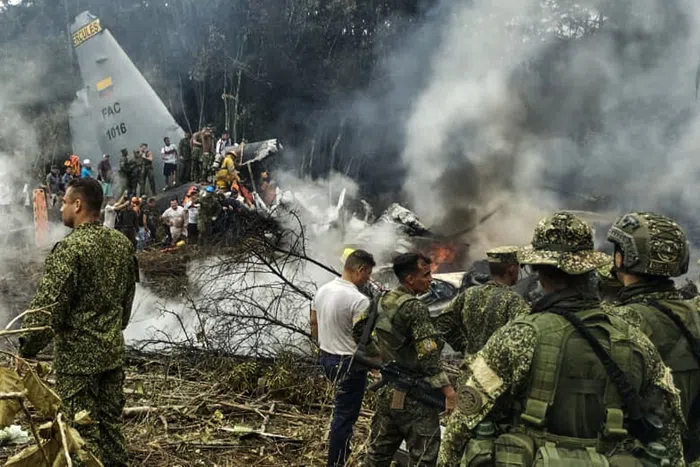
The quiet border town of Puerto Leguízamo, nestled in Colombia’s southern Putumayo province, has been turned into a scene of mourning following one of the deadliest aviation disasters in the country’s recent military history. On Monday afternoon, a Lockheed Martin C-130 Hercules transport aircraft—a workhorse of the Colombian Air Force—crashed just moments after lifting off, leaving at least 66 people dead and dozens more fighting for their lives in local clinics.
The flight, identified as FAC 1016, was reportedly carrying 125 people, including 114 army personnel, 11 crew members, and two officers from the National Police. Witnesses on the ground described a harrowing sight: the massive four-engine turboprop struggled for altitude before its wing reportedly clipped a tree. It slammed into the jungle floor less than two kilometers from the runway, triggering a massive fireball as onboard ammunition began to detonate.
Heroism Amidst the Wreckage In the immediate aftermath, it wasn’t just official rescue teams who rushed to the site. Local residents and farmers were among the first to arrive, braving thick black smoke and secondary explosions to pull survivors from the mangled tail section. Videos from the scene showed injured soldiers being rushed through dirt paths on the back of civilian motorcycles—a testament to the desperate, makeshift nature of the initial rescue effort in this remote Amazonian outpost.
A Pattern of Concern? This disaster is particularly jarring as it marks the second major C-130 crash in South America in less than a month, following a similar tragedy in Bolivia in late February. While Defence Minister Pedro Sánchez was quick to state that the aircraft was in “airworthy condition” and the crew was “duly qualified,” the crash has sparked a political firestorm in Bogotá.
Critics of President Gustavo Petro have pointed toward recent budget cuts to the military, suggesting that reduced flying hours and maintenance hurdles might be taking a toll on safety. President Petro, however, has blamed “bureaucratic difficulties” for slowing down the renewal of the aging fleet, even as he expressed deep sorrow for what he called a “national tragedy.”
The Road Ahead As of Tuesday morning, the death toll remains at 66, but with four personnel still missing and several survivors in critical condition, there are fears the number could rise. Two specialized medical planes have been dispatched to evacuate the wounded to Bogota for advanced care.
For now, the ICPC and aviation experts are scouring the wreckage. While officials have ruled out an attack by the rebel groups that frequent the Putumayo border, the real question remains: why did one of the most reliable aircraft in the world fail so catastrophically during its most critical phase of flight?